A swatch approved in spring and a roll delivered in autumn can carry the same colour code, come from the same supplier and behave like two different materials. The jacket cut from the roll stands away at the front, marks at the elbow before lunch, and takes a shine along every pressed seam. Nothing was defective. Something was never written down.
This note treats PU leather for clothing as a material a buyer has to judge, not a line item to compare on price. It sets out what the cloth is made of, what can be settled on a sample bench in an afternoon, what belongs in the purchase specification, and what the certificates in the folder do and do not cover.
Short answer: PU leather for clothing is a polyurethane face on a textile backing. The face gives colour, surface and cleaning behaviour; the backing decides how the garment hangs, how it recovers after folding and whether a seam lies flat. Most bulk failures trace back to the backing or to the shade reference, not to the coating itself.
In brief:
A coated cloth has two parts and only one of them is visible. The face is polyurethane: pigment, sheen, texture and the way a mark wipes off. Underneath sits a textile web, either a knit or a bonded non-woven. A knit web travels with the arm and springs back; a bonded web holds a panel flat and keeps a cut edge tidy.
That single fact explains most of the confusion in a first quotation. Two rolls can both be sold as PU leather for clothing and still suit different garments: one is built for a soft bomber, the other for a structured blazer. If the quotation names only the coating, the buyer is comparing a colour against a colour.
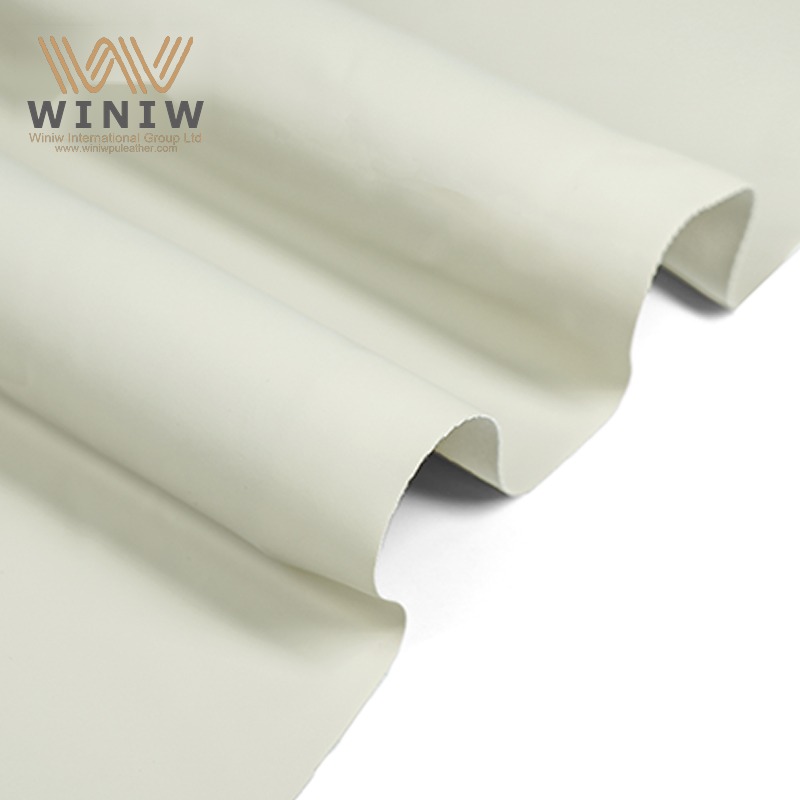
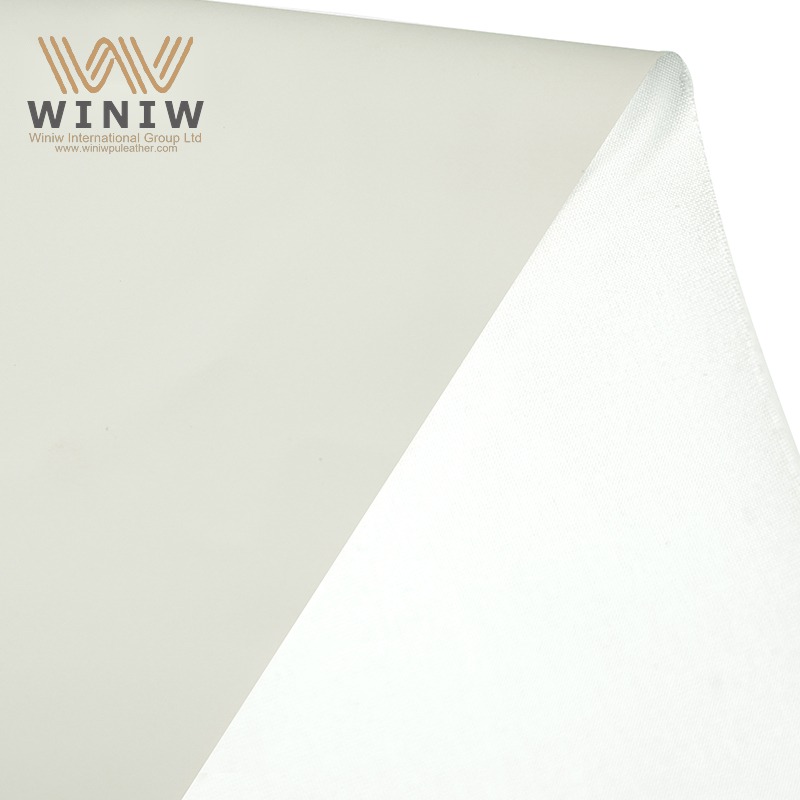
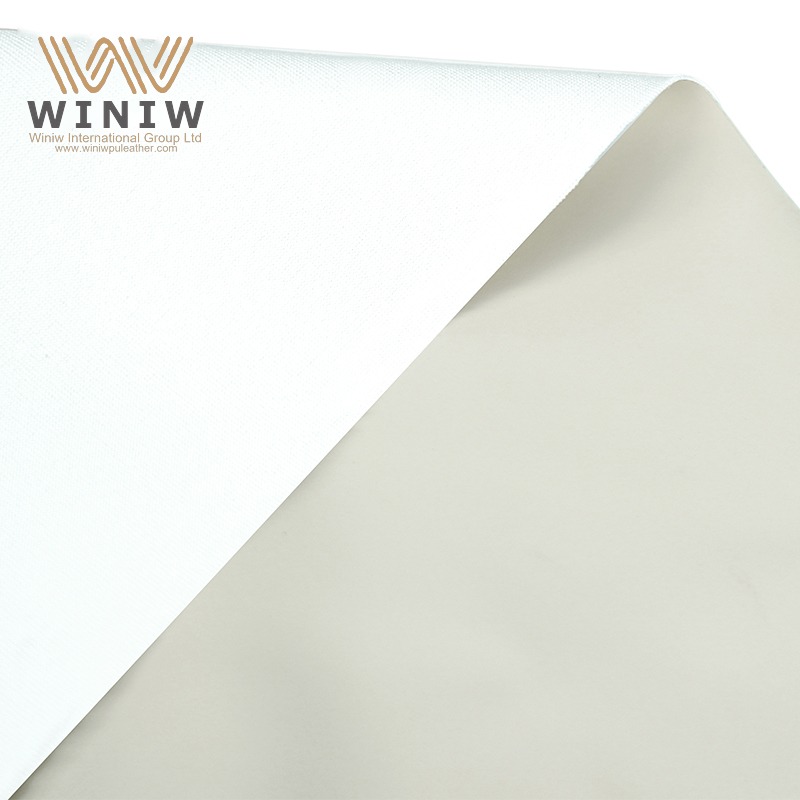
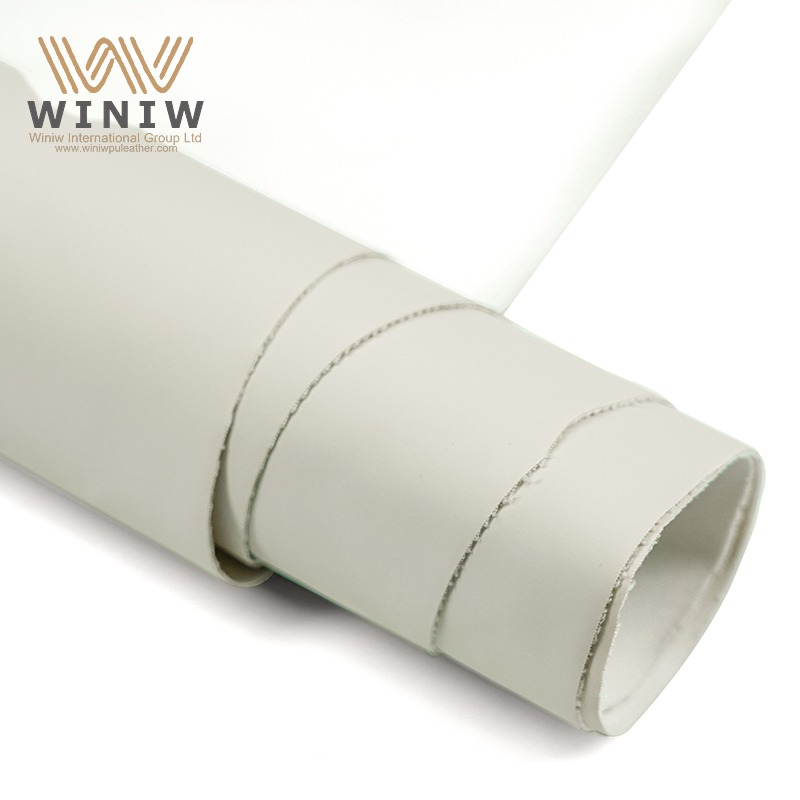
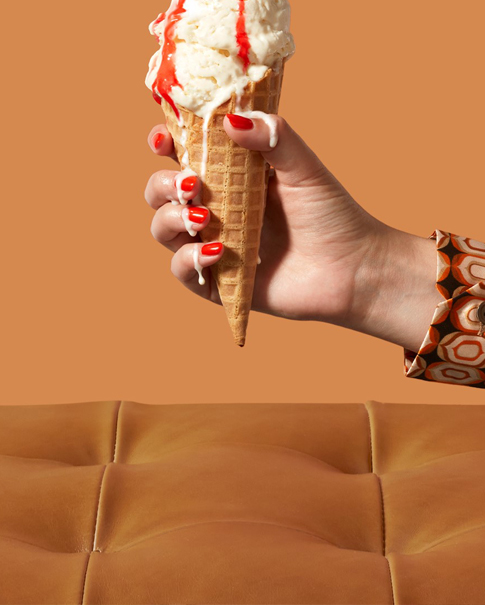
The cream cloth in these photographs is a PU face on a fibrous backing, developed against a customer's master shade. It is supplied by the roll for cut-and-sew work, so the questions worth asking are the ones a pattern cutter and a finishing room would ask, in that order.
Hold a metre over the edge of a table and watch where the bend falls. A bend close to the edge means the cloth will follow a body; a bend that pushes outward means it is carrying its own weight and will read as outerwear. Write the result down as a kept piece, because "soft" describes a hundred different cloths and none of them the same way.
Grip a corner for ten seconds, release it and look. Cloth that flattens again keeps a jacket presentable through a shift. Cloth that keeps the crease looks tired by mid-morning and worse after cleaning. Recovery is built into the backing before coating, so it cannot be added at finishing, and no press setting will recover it later.
Tilt the sample under the lamp you actually use and look along it, not straight at it. Uneven grain, a drift in sheen and fine handling marks show up at that angle and disappear when you look flat on. It is also the only reliable way to compare two rolls produced months apart.
Five lines cover most of what a cutting room and a finishing room need, and each one can be checked against a physical piece rather than against a sentence in an email.
| Point | What to put in writing | Why it decides the run |
| Build | PU face, plus knit or bonded non-woven backing, named | Hang, stretch and seam behaviour follow the backing |
| Usable width | The trimmed width per delivery, confirmed per order | Marker planning is costed on the usable figure, not the nominal one |
| Substance | Confirmed per order, matched to the block you cut | A change in substance changes drape and needle behaviour together |
| Shade reference | A signed physical standard, plus the light it was approved under | Most "wrong colour" claims are two people judging under two lamps |
| Paperwork | Which report, which material it tested, and its date | A report for another construction does not cover this cloth |
Where a figure is genuinely open, the honest entry is "confirmed per order". A catalogue number invented to fill the cell is worse than a blank one, because somebody downstream will cut a marker to it.
Colour is agreed twice: on a card, then on a roll. The card sets the target; the roll shows whether the batch reached it. Skipping the second step moves the discovery to the cutting table, where a shade break between two rolls can strand half a size run.
Three habits remove most of that risk. Agree the light source when the standard is signed, because a shade that matches under office lighting can separate under daylight. Keep one signed piece per colour, dated, and compare new deliveries against it rather than against memory. And treat rolls from different batches as different materials until a sewn sample says otherwise: cutting a single garment across two batches is the one mistake a finishing room cannot fix.
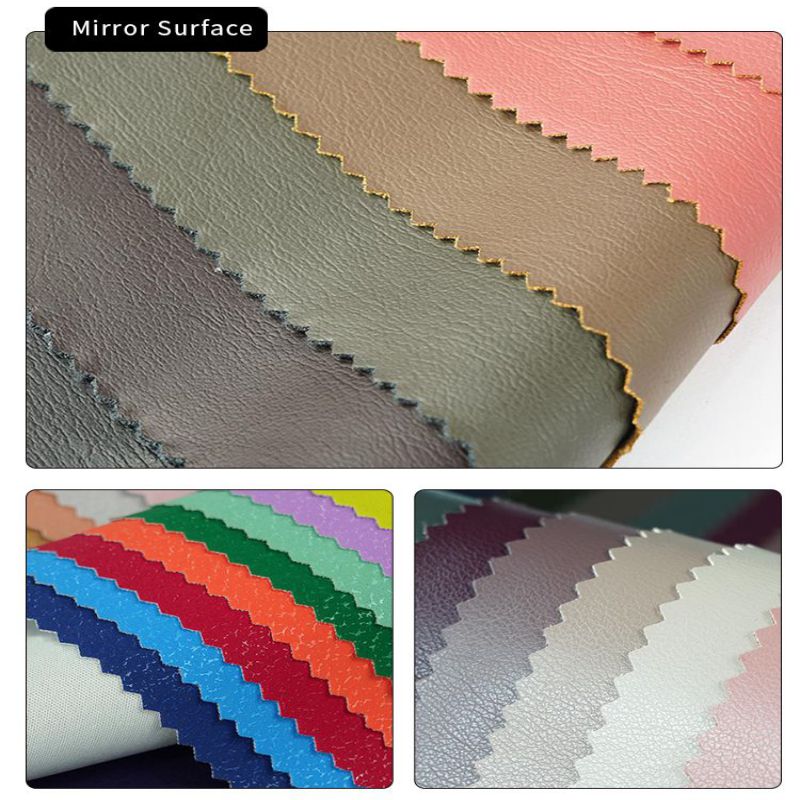
Surface is a separate decision from shade. A matte face hides handling marks; a mirror or embossed face carries a look but shows every touch. If a range needs both, say so at sampling, because the two run on different finishes.
A coated face does not compress the way a woven does. At a join the PU meets itself, and on a curve that surplus has to go somewhere: it puckers, ripples, or leaves a bright line where the foot has flattened the surface. A narrower allowance and a clipped curve usually do more than a heavier needle.
Heat is the other quiet problem. A needle running at speed warms up, and a thermoplastic face reacts to warmth by developing a row of small shiny dots that no amount of pressing removes. Slower running, a fresh needle and a longer stitch are the usual answers, and the trial belongs on your own machine rather than on a sampling bench. Our note on cutting, seaming and pressing behaviour goes through the settings in detail.
A folder of certificates is not a set of claims. Each report covers one material, one test method and one date, and the useful question is always the same: does this report name the cloth I am buying?
For the material behind this note we hold a REACH SVHC screening from Intertek, report SZHH01505701, run on a material sample. It says that the substances on the candidate list were screened against the 0.1% by weight disclosure threshold in that sample. It says nothing about a finished jacket, its lining, its zip or its buttons, and it is not a product certification.
An OEKO-TEX certificate also sits in our folder, number 20.HCN.29873, and it is worth being precise about it: it covers a brushed polyester and elastane knit with a water-based PU coating, a different construction from the cloth described here. We would rather say that plainly than let a buyer discover it in an audit. Standards written for footwear, automotive interiors or upholstery are not transferable to clothing either, and we do not present them as if they were.
⚠️ Composite example drawn from common buyer situations, not a named customer; no numbers are attached.
A label approves a cream swatch in February for a spring collection. The sample jacket is right. The bulk arrives and the fronts feel stiffer, the sleeves shine after pressing, and two sizes pucker at the armhole. Nobody can point to a defective roll, because there is not one.
What changed was never written down: the backing was switched to a web that was available at the time, the press had been set for a different cloth, and the seam allowance had come across from a woven block. A crush test, a press test on an offcut and one sleeve sewn on the real machine would have caught all three before the marker was laid. The cost of those three tests is a few metres. The cost of skipping them is a size run.
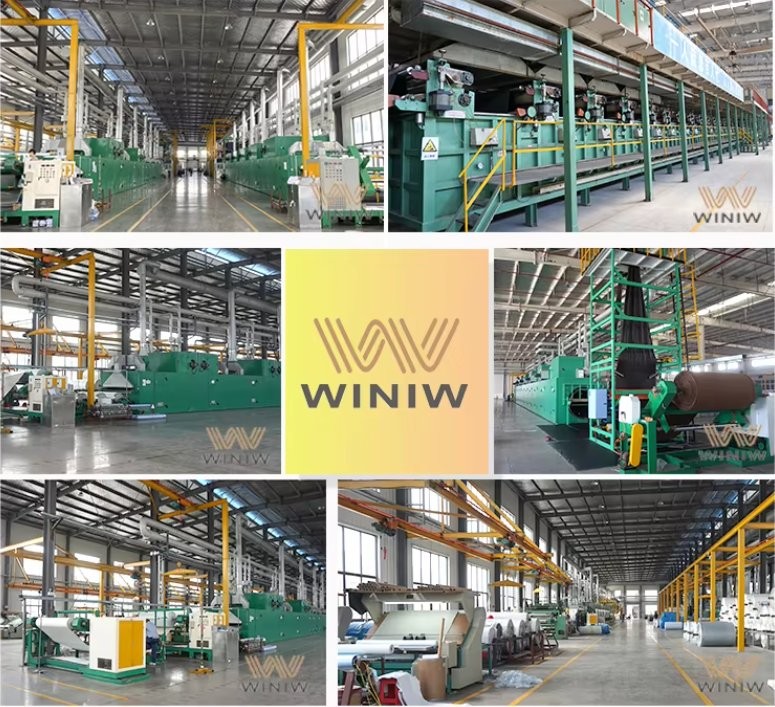
The cloth in these photographs is ours, made on our own coating and lamination lines rather than bought in and re-sold. WINIW has worked in synthetic leather for 25+ years, and clothing is one of the programmes we quote every week.
The lines. Coating, lamination and finishing run in-house. That is why a change of backing or surface can be discussed against a real machine rather than a catalogue page, and why a replacement roll for an approved shade can be matched against the original run.
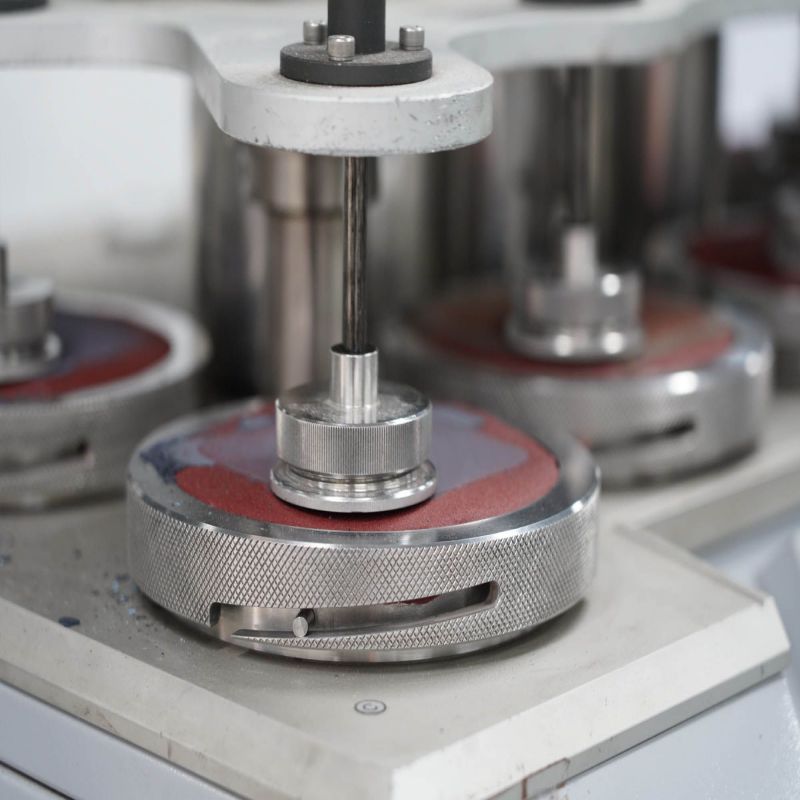
The bench. Abrasion, tensile, flex and water-resistance checks run in our own laboratory before anything is offered. Those results are a screening step, not a third-party certificate, and we do not present them as one.
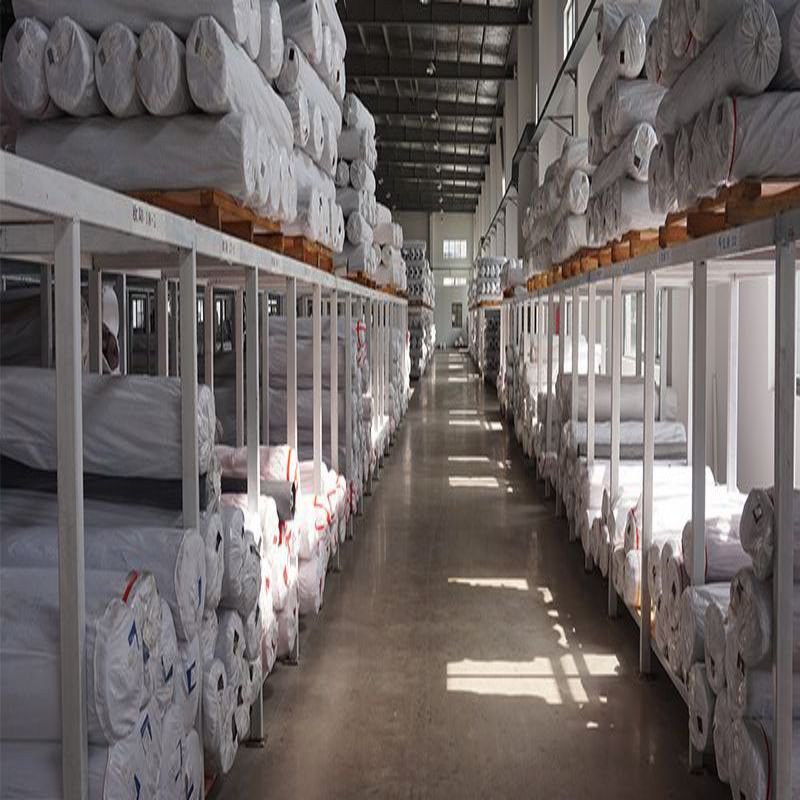
The stock. Rolls are held and loaded from our own warehouse, which makes a repeat order in an approved shade practical. Packed on pallets and loaded directly, a programme can be released in parts without re-cutting the whole order.
Where a figure is missing, it is missing on purpose: we would rather agree a number on your block than print a catalogue value nobody has measured.
As a shell it blocks wind and holds a line, but warmth comes from what you line it with, not from the coated cloth. Treat the face as the outer layer and plan insulation separately, or the jacket will feel cold and heavy at the same time.
The card sets the target, not the tolerance. Each run should be compared against a signed physical standard under the agreed light, and rolls from different batches should be treated as separate materials until a sewn sample proves otherwise.
No. Hand in PU leather for clothing comes from the backing and the finish as much as from substance, and a thin cloth on a firm bonded web can feel stiffer than a heavier one on a knit. Judge the pair, then fix the substance you actually cut.
A signed shade standard, the report reference for the material supplied, and the batch identification on each roll. If a report covers a different construction, ask for it in writing rather than assuming it transfers.
Not the same thing. Both are coated materials, but microfiber leather uses a microfiber base that behaves differently under the needle and in the hand. If your block was developed on one, do not switch to the other without a sewn trial.
Send the colour master and the garment, and we will cut A4 or A3 pieces in the backing that suits the block: knit for movement, bonded web for structure. Swatches are free; freight is collect.
|
Working on a footwear or upholstery programme instead? Browse the PU leather range, or see how our lines work. |
Business Phone : +8618150976625
E-mail : Hello@MicrofiberLeather.com
Mobile & WhatsApp : +8618150976625
Địa chỉ nhà : W6-302 Shimao Manhadun Shuanglong Road, Jinjiang Quanzhou Fujian China



© Bản quyền 2022 Winiw International Co., Ltd.Đã đăng ký Bản quyền.
XML | Chính sách bảo mật |